SPPC Blog
Work experience at the Scottish Partnership for Palliative Care
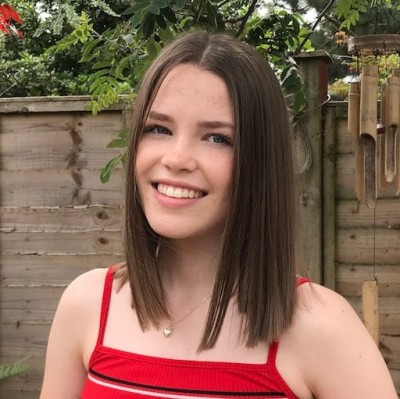 I’m an S4 student at Portobello High School. This year everyone in my year group got the opportunity to experience a working environment for one week. You could choose from a list of suggested placements or find one yourself.
I decided to come to the SPPC as I’m very interested in working with people and helping those around us – this is the sort of work I would like to do when I’m older. My aunty Caroline who runs The Truacanta Project has spoken about her work and I’ve always thought it sounded great. I like the fact that it is breaking the stigma around talking about death, dying and bereavement. As I feel that in our society it is a topic which is so often avoided.
I knew a little bit about the work beforehand, but my knowledge and understanding has grown immensely. I learnt a lot about the Truacanta Project and the different events that are on throughout the year, for example, To Absent Friends and End of Life Aid Skills for Everyone. I know lots about Death Cafes and think they sound like a brilliant idea. I have been working on a proposal for a teenage death café which has been fun.
I’ve learned so much from my time with the SPPC. Being in an office environment is very different from school. Everyone was working on different tasks including me which gave me a sense of independence. I have been asked to do things I normally wouldn’t do such as write a blog post, create flyers and leaflets, write a proposal, and manage their social media. I attended a meeting with one of the shortlisted Truacanta communities where I learnt about their goals and hopes for their community. It was interesting to hear how they hoped to improve the conversation around death, dying and bereavement and how they wish to bring awareness and support into the local community.
I will take lots away from my time at SPPC. I gained an insight into how a charity works and saw how a good idea can turn into a reality. You don’t need to be a powerful person to make a change - if you have an idea you can make it happen with hard work and determination. I saw ordinary people wanting to make an impact on society and people’s perception on death, dying and bereavement.
Overall, I think work experience is a great opportunity for high school pupils as it gives us an insight into working life and the adult world and gives the chance to learn new skills and do tasks we might not normally do.
Lastly, I would like to thank SPPC for being so welcoming to me as it can be quite intimidating going somewhere new.
By Poppy Gibb-Kenny
My QNIS Experience - Reflections of a CHAS Diana Children's Nurse
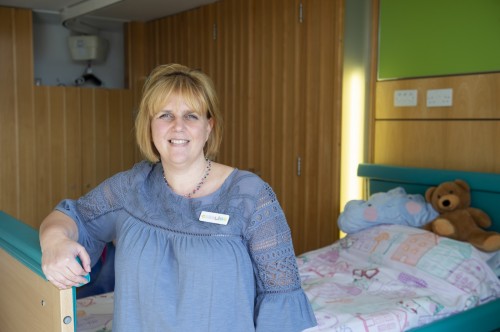
The Queen’s Nurses Institute Scotland (QNIS) celebrates its 130th Anniversary this year. Its aims have always been to promote excellence in community nursing to improve the health and well-being of the people in Scotland. Here Caroline Porter, Diana Children's Nurse at CHAS describes her experience of the QNIS 2018 Development Programme:
It wasn’t until I was in the programme that I realised how much I needed it. I have been a nurse for 30 years working in acute, community and hospice settings. If I am honest I was struggling. I found myself looking for opportunities to run away and escape the pressures I found myself under. I was close to burnout but was too afraid to admit this to myself never mind anyone else. I am my own harshest critic and although I didn’t realise it at the time, I was making my own role harder than it needed to be.
Every nurse does a difficult job and I am no different. I work for a brilliant organisation Children’s Hospices Across Scotland CHAS. My role requires strategic, educational and clinical commitment. I meet families in hospital, often at a point of crisis in their lives, who may be facing the potential imminent death of their beloved child. I quickly have to form an intense, trusting relationship with families to explore potential choices around preferred place of care and preferred place of death.
As nurses we tend to focus on our patients, their families, our colleagues, our own family and friends but rarely ourselves. That is what the QNIS programme has done for me. It has made me stop running and made me pay attention to myself and value my own needs.
During the five day residential workshop in Balbirnie, we were introduced to the concept of Action Learning. We were grouped geographically and our group became affectionally known as the Westies. Our group very quickly developed a profound, strong bond and connection based on trust and new found friendship. The group became a safe place to explore where I really was. I have always found it easier to say I am ok, rather than to actually express to myself or another, how I was really feeling. I had such a fear of exposing my own vulnerabilities as I perceived this as me showing weakness. It was emotional for all of us but I learned that it is ok, not to be ok. I learned that most of us have similar feelings, but as nurses we bury them quite deeply. What I learned through the programme was that my vulnerabilities were my strengths and not my weakness as I had previously thought. Creativity is fed on vulnerability and it is what makes me good at what I do.
Following Action Learning we met our Coaches for the programme. Again I wasn’t really prepared for the impact. How could talking to someone for an hour a month make me a better Diana Children’s Nurse and how could this impact on the issue for exploration I had identified? The focus of my coaching was primarily on Caroline the person not Caroline the Nurse. I have been historically taught through my two modular RGN and RSCN trainings, that you left your personal life in the locker when you put your uniform on for the shift. I have learned that we come to work each day as a whole person, not just Caroline the Nurse. It is impossible to fully separate the two things, it’s the combination that makes us so valuable as nurses. Kate my coach explored with me what I wanted from the coaching. I felt I wanted to bring the old Caroline back, the less stressed, good fun and care free Caroline. We explored what I had being doing to myself and focussed on the internal saboteur that reigned firmly in my head. The imposter syndrome that plagued me at most strategic and clinical meetings but neither strangely present when I worked directly with children and families. This was always my comfort zone.
I discovered that both my internal saboteur and imposter syndrome where predominately creating the level of stress that I felt under. It was me that was creating this stress not anyone else. I was making my role far harder than it needed to be.
Kate pushed me out of my comfort zone and requested I approach ten people to acknowledge me in three different ways. This felt really awkward as surely people would consider this fishing for compliments. Prior to the programme I physically batted compliments away. “Oh it’s just my job” or “anyone would do the same” were my normal responses to any compliments, I think this is the same of many nurses. If you think about it, it’s quite rude not to acknowledge, accept and thank someone who has taken the time and effort to compliment you. I have learned to accept compliments and to bank them as a resource of strength. Towards the end of the coaching programme, Kate asked me had we brought Caroline back. My answer was no. We didn’t need to because I was comfortable being the Caroline I am today, not needing to be someone of the past. I am enough!
Kindness is such a powerful, free resource that we all possess. I have always considered myself a kind person. I have never doubted that I am extremely kind to my patients, their families, my colleagues and my own family and friends. The only person I wasn’t kind to was myself. Kindness has been weaved throughout the QNIS programme. Learning to take time for myself was a hard lesson but I have learned to embrace it. I was a sceptic of the concept of Mindfulness but now I am a complete convert. Again a simple free resource, giving yourself three minutes a day to focus on the simplistics of breathing and relaxation. It is something that everyone can achieve. The hardest part I have found is sustaining it. I have slipped at times, forgetting to place that importance on myself but the network I now find myself in with the other 20 Queens Nurse reminds me often to reconnect.
So the reality was I was close to burnout. I was hanging on by my fingertips, looking for any opportunity to run away. But it was me that placed this pressure on myself, not others. QNIS has got me looking forward to the next ten years of my career. I am ambitious, I am going on to do great things within Children’s Palliative Care. As nurses we need to learn to start by being kinder to ourselves. I firmly believe that my story is not too different from the many others who strive to do the best for the babies, children, young people, families and patients we all look after. I hope my honesty resonates with others.
Caroline Porter is a Queen’s Nurse and Diana Children’s Nurse, West of Scotland, Children’s Hospices Across Scotland. She can be contacted at: carolineporter@chas.org.uk
Reflections from Dr Derek Doyle
As I sat at the bedside of my much-loved wife dying in St Columba's Hospice a few months ago my mind inevitably went back 40 or more years to things that were said to me in those 'early days'. The people who uttered them would never have thought of them as so important as to be repeated years and years later but history has shown they are. Let me share them with you now but not in any special order.
I am indebted to many of the pioneers of Palliative Care here in Edinburgh, many UK cities, most European countries, North America, Hong Kong, Japan, New Zealand and Australia.
Read, then stop and think!
"Palliative care is just good, compassionate care - very much needed but not a new discovery."
"Hospice /palliative care is no more / no less that just good compassionate caring."
"Doctors are getting better at keeping people alive but they seem to forget that all life must have quality rather than quantity."
"From their student days doctors have been trained to see death as a mark of failure. Who wants to work with failure?"
"Doctors seem to have been taught more about opioid dangers than their genuine benefits."
"Good doctors have been giving excellent palliative care for years but did not give it a fancy name."
"Contrary to what so many hospital doctors think, GPs are not idiots. They should try it for a month!"
"How do you prevent this palliative care ward becoming like all the general wards in this hospital?"
"There would be fewer calls for euthanasia if all doctors were up-to-date on pain management which is getting better year on year."
"Are GPs really so busy, even in an occasional evening, that they cannot visit a patient in the local hospice?"
"Listen to the nurses - they often know more about a patient than doctors think."
"Don't snigger at a patient wanting someone to help them pray or read a passage from the Bible for them - most people look for spiritual (though not necessarily denominational) meaning as death approaches."
"Your new specialty - Palliative Medicine - will only survive and justify its existence if it gives high priority to research."
"Remember to reassure patients and relatives that research is not experiments on them."
"Remember that many ( possibly most) dying people secretly wonder if they are dying because of something they have done or failed to do."
"Take every possible opportunity to teach students - medical, nursing, divinity....... Time spent on tutorials is NEVER wasted."
"Remember that Mr and Mrs Public think medical research is experimenting on animals and dying humans. The very word can upset some people."
"Remember that many relatives of a dying person wonder if they are candidates for the same condition."
"Old-fashioned as it may sound, most patients like doctors to shake their hand on ward rounds or to hold a hand of a doctor or nurse speaking to them."
"No matter how busy a palliative medicine doctor is, 10-20 minutes with the closest relatives of a new patient is NEVER wasted time."
"Always explain why a test is being done and how it might help (good practice anyway)."
"Ask first, and if a patient wants to know why medication is being changed, explain."
"Remember that most people are unsure what 'lesions', 'tumours', 'malignancies', 'cancers', and 'sarcomas' are!"
"Try to explain as much as possible to terminally ill people but do not bewilder them more than ever - they are often very muddled anyway."
"Do hospice doctors really know what life is like in a frantically busy, under-staffed, under-funded ward in a general hospital?"
"I expected to see the nursing staff fraught, nervous or red-eyed from crying. What's the secret?"
"Two years ago I came on this committee looking at your application for specialist status of Palliative Medicine. I was opposed to it and ready to walk out. Now I see it as one of the greatest developments in Medical Care in a generation."
This blog is by Dr Derek Doyle OBE, Honorary President of the Scottish Partnership for Palliative Care. Recognised worldwide for the contributions he has made to palliative care, he was the first Medical Director of St Columba’s Hospice, the first Chairman of the Association of Palliative Medicine, the founding Editor in Chief of Palliative Medicine and Senior Editor of the first three editions of the Oxford Textbook of Palliative Medicine.
Palliative and End of Life Care Standards in Scotland’s Prisons
The Scottish Governments Strategic Framework for Action on Palliative and End of Life Care shares a vision that by 2021 everyone who can benefit from palliative care in Scotland will receive it – ‘no matter what their circumstances’.
There is a reality in Scotland’s prisons; prisoners are getting older and facing end of life in prison. It would be fair to say this is not just an issue in Scotland but actually reflects the growing international issue of ageing prisoners. In May 2017 the European Association of Palliative Care commissioned a task force with the aim of mapping Palliative Care provision for prisoners in Europe. Prison systems vary hugely across countries and attitudes to and provision for dying prisoners are variable.
I have been employed in a two year role with the task of implementing palliative and end of life care standards in Scottish Prisons. This role is funded by Macmillan with the primary goal of supporting the NHS staff and Scottish Prison Service staff working in prisons continuing the work of implementing these standards of care.
A 2017 report by Audit Scotland highlighted that there was a higher death rate among the poor in Scotland with mortality rates from cancer and heart disease higher than the rest of the UK. The incidences of cancer are increasing across Scotland, which means there is likely to be a growing number of prisoners with a cancer diagnosis. Prisoners experience a disproportionately higher burden of illness (including infectious diseases, long term conditions and mental health problems) and problems with substance misuse (drugs, alcohol and tobacco). The prison health demographics sees the health age of most prisoners as being at least a decade older than the general public with a shorter life expectancy with the fastest growing population in Scotland’s prisons being males over 50.
A recent report Who Cares? The Lived Experience of Older Prisoners in Scotland's Prisons by HM Inspectorate of Prisons Scotland highlighted the case of ageing prisoners. It discussed the challenges for the staff working in prisons in caring for this group and for the prisoners themselves with their biggest fear, dying in prison. The group surveyed were predominantly serving 4 years or more which is considered a long term sentence.
Prisons have historically been built for young men but the changing face of prisons mean that the environment is often unsuitable for older prisoners. It is a sobering experience when you enter one of the halls in a prison and see wheelchairs, zimmer frames and walking sticks and where the general population would not look out of place in a Nursing home.
The Healthcare for each prison is the responsibility of the Health Board where the prison is situated. The core Health team is made up of Primary Care nurses, Mental Health nurses and Addiction team. They are supported by a GP and varying other visiting professionals from their Health Board.
There is no provision of in-house hospital facilities in Scotland’s prisons and no 24 hour nursing care. There is an out of hour’s system to contact a GP if required. Social care is provided by agencies organised by the Scottish Prison Service.
What was evident in discussions at varying prisons was the challenge in identifying their population who required supportive and palliative care. It was clear that for staff, just like many others; there were myths and misconceptions around the subject of palliative care with most voicing it was about end of life.
An example of work done in one of the prisons which have a larger cohort of older prisoners is in establishing a multidisciplinary Supportive and Palliative Care meeting which allowed for discussion and early identification of these prisoners. I have introduced the SPICT4-ALL tool and there is ongoing discussion how we can apply this.
I recently supported ‘To Absent Friends’ events in HMP Kilmarnock and HMP Glenochil and was humbled by the honesty of the prisoners and the staff in discussing their experiences of loss. The events were well received and there has been further discussion as to how this could be developed.
In the few months since I commenced in this post I have met some extraordinary staff from both the Prison service and NHS, who works tirelessly to ensure that prisoners receive the best standard of care possible within their context. There is an opportunity for those of us who have the knowledge and experience working in Palliative Care to further influence this work and continue to support the staff and those who are in prison.
Gail Allan is Macmillan Palliative Care Coordinator for Prisons. If you would like to know more or share your work in Prisons then please get in touch by email.Living and dying with the 'unknown unknowns'
“there are known knowns. these are things we know that we know. there are known unknowns. that is to say, there are things that we know we don't know. but there are also unknown unknowns. there are things we don't know we don't know.”
- Donald Rumsfeld
Life with a condition like Parkinson’s is characterised by uncertainty.
Getting a diagnosis (the known known) typically takes some time, and even then doctors can’t reliably predict what the future will hold for any individual (a scary combination of known unknowns and unknown unknowns). And as the confusing Rumsfeld quote demonstrates, people find themselves in a bewildering and uncertain world where nothing can be taken for granted.
More than 60 Parkinson’s symptoms are possible - but they are not inevitable, and they affect each person in a unique combination of ways. Rates of progression vary considerably. With the right treatment and support, some people live with the condition relatively well for some years. Others face significant impairments within the first five years.
Many people develop dementia, communication and mental health symptoms that can affect their ability to make their wishes known as their condition progresses.
Around 900 people in Scotland die each year with Parkinson’s recorded on their death certificates, but there is evidence that this is significantly under-recorded. The most recent UK Parkinson’s Audit in 2015 showed that only 28% of people with advanced Parkinson's had any recorded discussion of end of life care issues. Very few people with Parkinson’s access specialist palliative care, despite evidence that people at the end of life report quality of life as bad - or worse than - people with advanced cancer and motor neurone disease.
More than 11,000 people in Scotland are trying to balance hoping for the best while preparing for the worst. But facing the inevitability of declining health can be really tough.
Take Janice, diagnosed eight years ago. She says she is “pretending to be ok”.
“I live for the day, and I don’t think about the future a lot. It flits through my mind and then out again. I’ve tried to make life so normal for my two children. I don’t want my kids to have a sick mum, I want them to live their young lives and not be worried.”
Janice was still working as a palliative care nurse when she was diagnosed – and by coincidence, her first client after her diagnosis was a man dying with advanced Parkinson’s. She found the experience unexpectedly reassuring, “He was an older man – much older than me, and his death really wasn’t that different from those I’d seen with end-stage cancer. I realise that dying didn’t frighten me. I thought I feel OK, I can cope.”
That’s not to say that she is without fear. But what Janice fears is dependency, not death. “I can’t stand the thought of being dependent. I’m the person who does. I value my independence and my ability to help other people.”
And the fear of future impairments is common. One man, diagnosed with Parkinson’s in his mid-thirties, gets his wife to vet Parkinson’s publications for him, so that he does not have to read anything depressing. Some people – including those with advanced illness - prefer to avoid meeting others with Parkinson’s in case they represent their potential future. Gerry has lived with Parkinson’s for twenty years, and says he and his wife use humour to deflect their fears, with jokes about care homes to the fore.
One man told me about his late wife. She lived well with her Parkinson’s for eighteen years, before it advanced to a point that made her last four years very difficult.
By all accounts, she received excellent care and support. But the transition to being cared for was an impossible one for her, and she hated the experience. She liked her carers, but found losing her independence degrading. She said that using a hoist made her feel “’like a piece of meat”.
Her widower says that with 2020 hindsight, he wishes that the family had got more support earlier, like a wet room, a stair lift and a wheelchair accessible car. But he admits that his wife was resistant to adopting what she saw as the markers of increasing dependency.
It can be challenging for health professionals, families and friends to support people affected by Parkinson’s to think about and plan for the future. We’re up against a culture that fears disability, frailty, old age and death, and a condition that is characterised by uncertainty. It would perhaps be less intimidating if advance planning were seen as something for everyone to consider, not just those who are facing a future of increasing ill health.
But the issues people with Parkinson’s face are pressing. Creating a culture that supports people to think about the future can - and must – be done.
Parkinson’s UK has developed a range of accredited information materials about advanced Parkinson’s to support individuals and families to prepare for declining health and the end of life. Our free local adviser service and helpline offer confidential one-to-one support to people affected.
The health professional-led UK Parkinson’s Excellence Network is looking at ways to increase the uptake of anticipatory care planning for people with Parkinson’s, and spread this across services in Scotland and the rest of the UK.
The reasons why we must deliver a change in culture ultimately lie with people living with Parkinson’s. The good news is that Janice is already thinking about her future, with a will pending once complex pension issues are resolved. Gerry has already planned his funeral, and is considering how power of attorney could deliver greater peace of mind for him and his wife. And as one carer, whose wife has had Parkinson’s for more than 20 years said to me:
“This is a subject which nobody likes to talk about, but I think it has to be brought out into the open, so that all families affected by Parkinson’s are able to make the right decisions if they need to. My wife and I are glad we’ve had the opportunity to discuss these issues, because we now have a clearer understanding of each other’s thoughts and feelings. We think it’s really helpful to have a prompt for such conversations while the person with Parkinson’s is relatively well. It’s certainly been positive for us.”
Tanith Muller is the Parliamentary and Campaigns Manager for Parkinson’s UK in Scotland.
If you are affected by any of these issues, please visit parkinsons.org.uk to access resources and free confidential support. access resources and free confidential support.
 RSS
RSS